Strategic CSR: How the PIND-Okomu Partnership is Redefining Community Development in Edo State
April 24, 2026
NSCDC Reaffirms Commitment to Strengthening Grassroots Peace Mechanisms in Ugboland HCDT
April 30, 2026
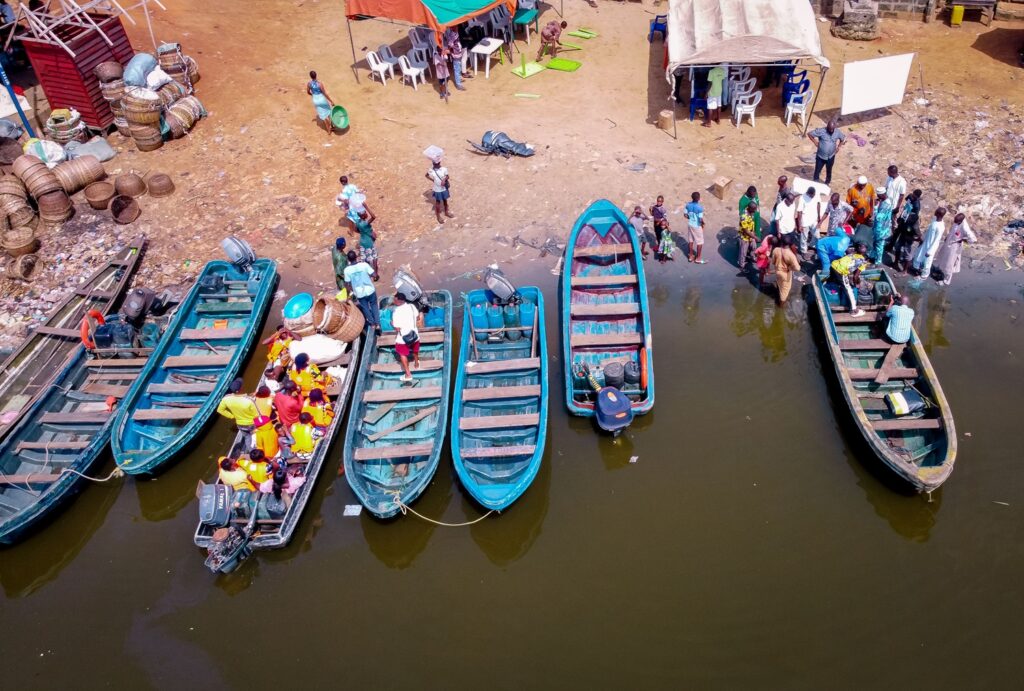
There is a growing global conversation around Blue Economy investment. From multilateral institutions to national governments, the idea of unlocking value from oceans, rivers, and coastal ecosystems is gaining traction as a pathway to economic growth, sustainability, and resilience. Globally, billions of dollars are being positioned toward maritime trade, fisheries, coastal tourism, and marine infrastructure. While this presents a new frontier of development for many countries, in Nigeria’s Niger Delta region, it is far more urgent.
The Niger Delta is no stranger to water-based economies. Its vast network of creeks, rivers, and coastlines has supported livelihoods for generations—long before “Blue Economy” became a global policy phrase. Yet, despite this natural endowment, the economic potential of these resources has remained largely overshadowed by decades of dependence on oil and gas.
This raises a critical question: What does the Blue Economy truly mean for the Niger Delta?
Speaking with an economist and Advocacy Manager at PIND Foundation, Chuks Ofulue, the answer goes beyond theory. According to him, the Blue Economy represents a significant opportunity to unlock new sectors of growth across the region, from marine transport and fisheries to port-based commerce and coastal enterprise development. He notes that if properly harnessed, investments in this space could generate widespread employment, particularly for communities already connected to waterways and maritime activity.
“There are vast opportunities within the Blue Economy that can create jobs at scale, from transportation to fisheries and port operations. But unlocking this potential requires deliberate planning and investment,” he explains.
There is evidence that the conversation is shifting from theory to action. Earlier this year, stakeholders convened in Ikot Ekpene for a summit to develop the Blue Economy in the Niger Delta. The gathering brought renewed attention to the region’s untapped marine potential and the need to rethink how these assets can drive sustainable growth.
At the national level, this momentum is being reinforced. Recently, the Federal Ministry of Marine and Blue Economy moved to deepen partnerships with the World Bank under the PROBLUE initiative, focusing on translating policy frameworks into investable opportunities. The emphasis is no longer just on understanding the sector, but on identifying bankable projects, strengthening data systems, and building coordinated approaches to attract long-term financing.
These are important signals, yet they highlight a familiar pattern: strong intent at the policy level, with the real challenge lying in implementation at the ground level. If approached deliberately, Blue Economy investments could reshape the region’s economic structure.
According to the World Bank, the Blue Economy refers to the sustainable use of ocean resources for economic growth, improved livelihoods, and jobs, while preserving ecosystem health. It relies on the sustainability of waterways; with improved maritime infrastructure, the cost of moving goods could be reduced, easing pressure on road networks and opening new trade corridors. For a region where access often determines opportunity, this shift could be transformative.
Across coastal settlements, the implications are immediate. Investments in fisheries could significantly reduce post-harvest losses, increase incomes, and stabilize livelihoods. There is potential for entirely new economic activities, eco-tourism, water transport services, and small-scale marine enterprises that can diversify household income. For entrepreneurs operating along these shorelines, the Blue Economy offers the opportunity to move from informal, survival-driven activities to structured participation in scalable value chains.
However, this transition will not happen automatically. It requires targeted support, including access to finance, capacity-building, and stronger integration into emerging market systems.
Ofulue emphasizes that beyond recognizing the opportunities, there is a need for a structured and coordinated approach to implementation. This includes developing clear policy frameworks, strengthening institutional capacity, and creating a roadmap that aligns investments across states and sectors.
“We need to first understand its potential and put the right policies in place. Without a clear roadmap, investments will remain fragmented and the region may not fully benefit,” he notes.
He further highlights the importance of adapting existing development models, explaining that lessons from land-based economic systems can be replicated and modified for water-based environments to drive sustainable and inclusive growth.
In the context of the Niger Delta, the Blue Economy cannot be imported as a ready-made solution. Without clear coordination across states, investments may remain fragmented. It must be localized, adapted to reflect the region’s unique realities, constraints, and strengths.
If executed correctly, the opportunity is significant. The Niger Delta can diversify its economy, reduce its oil dependence, and create new employment opportunities. By doing so, it can demonstrate how resource-rich regions transition toward more sustainable and inclusive models of growth.