Niger Delta LPG Businesses Explore Financing to Expand Clean Cooking Access
August 31, 2026
Investing in Peace: Young People Take the Lead in Niger Delta Dialogue
September 29, 2026
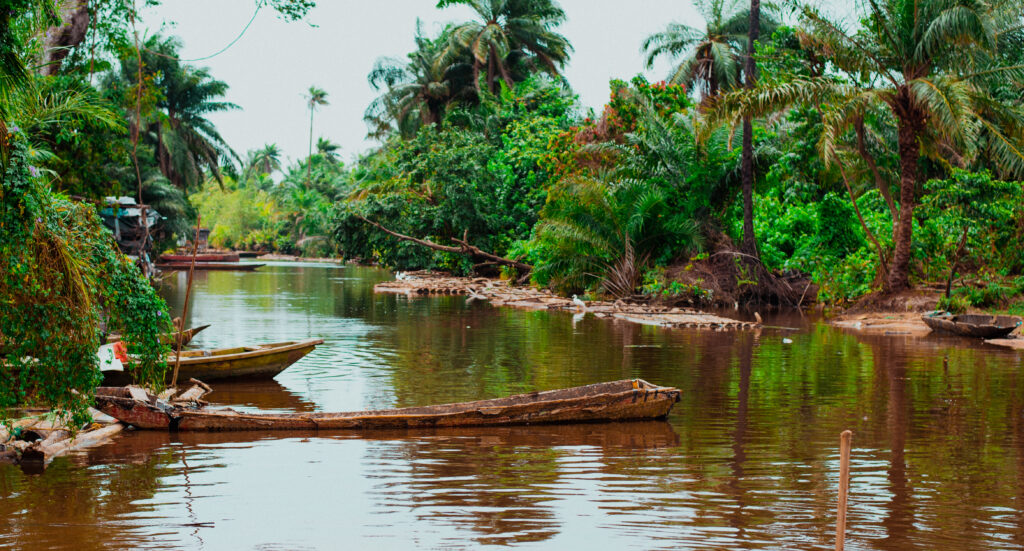
Rivers State’s extensive network of rivers, creeks, and coastal waters presents significant opportunities for expanding livelihoods, strengthening food security, and creating new economic activities through the blue economy, stakeholders in the state’s fisheries sector have said.
The opportunities cut across fisheries, aquaculture, fish processing and marketing, transportation, and other businesses linked to the state’s aquatic resources. However, stakeholders say unlocking this potential will require greater investment in infrastructure, skills, data, and sustainable management of marine resources.
Speaking during an interview with NDLink Champion Ogadinma Wokoma on the sustainable use of marine resources, Fibete Adokiye Bibi, Head of the Fisheries Department, Rivers State Ministry of Agriculture, described the state’s aquatic resources as a major economic asset with the potential to support livelihoods far beyond traditional fishing.
The blue economy refers to economic activities that depend on oceans, seas, rivers, and other aquatic resources while seeking to maintain the health and sustainability of those ecosystems.
For Rivers State, the concept is particularly relevant. The state’s waterways support fishing communities and provide routes for the movement of people and goods, while its coastal location creates opportunities across several stages of the aquatic economy.
From fishing to a wider value chain
According to Bibi, the sector’s economic potential extends beyond catching fish.
Investment in fish production, processing, storage, transportation, and marketing could create opportunities for small businesses and workers across the value chain. Improved access to equipment and infrastructure could also help fishing communities increase productivity and connect more effectively to markets.
For young people and women in riverine communities, these value chains could provide entry points into businesses beyond primary fishing, including fish processing, packaging, distribution, and other support services.
However, stakeholders note that the sustainability of these opportunities depends on protecting the natural resources on which the sector is built.
Sustainability is central to the opportunity
Bibi raised concerns about fishing practices that contribute to declining fish stocks, including the use of small-mesh nets that capture juvenile fish before they mature.
He stressed the need for greater awareness, monitoring, and adoption of sustainable fishing practices to ensure that the state’s aquatic resources remain productive for future generations.
The concern is significant for communities whose livelihoods and food supplies are closely tied to fishing. Where fish stocks decline, the effects extend beyond fishermen to processors, traders, transporters, and consumers.
Developing the blue economy, therefore, requires balancing increased economic activity with measures that protect the ecosystems supporting it.
Better data could unlock more investment
Stakeholders also identified the limited availability of reliable fisheries data as a constraint to planning and investment.
Bibi said improved information on fishing communities, production levels, fishing locations, and the needs of people working within the sector would help government and development organizations better target interventions.
Reliable data could also make it easier to identify gaps in infrastructure and support services, from fishing equipment and landing facilities to storage, transportation, and market access.
For development actors, better data provides a clearer picture of where investment can generate the greatest impact.
Building an economy around Rivers State’s waterways
The blue economy presents Rivers State with an opportunity to look at its waterways not only as natural resources but also as platforms for inclusive economic development.
Realizing that opportunity will require sustained attention to the people and businesses already operating within the sector, alongside investments that allow new enterprises to emerge.
This includes improving infrastructure in riverine communities, strengthening skills, supporting sustainable fishing practices, and building the data systems needed to guide investment.
As Rivers State considers pathways for economic diversification, its waterways offer an existing foundation on which new livelihoods and businesses can be built.
The challenge is turning that natural advantage into a productive, sustainable, and inclusive blue economy that benefits the communities whose lives and livelihoods are already connected to the water.